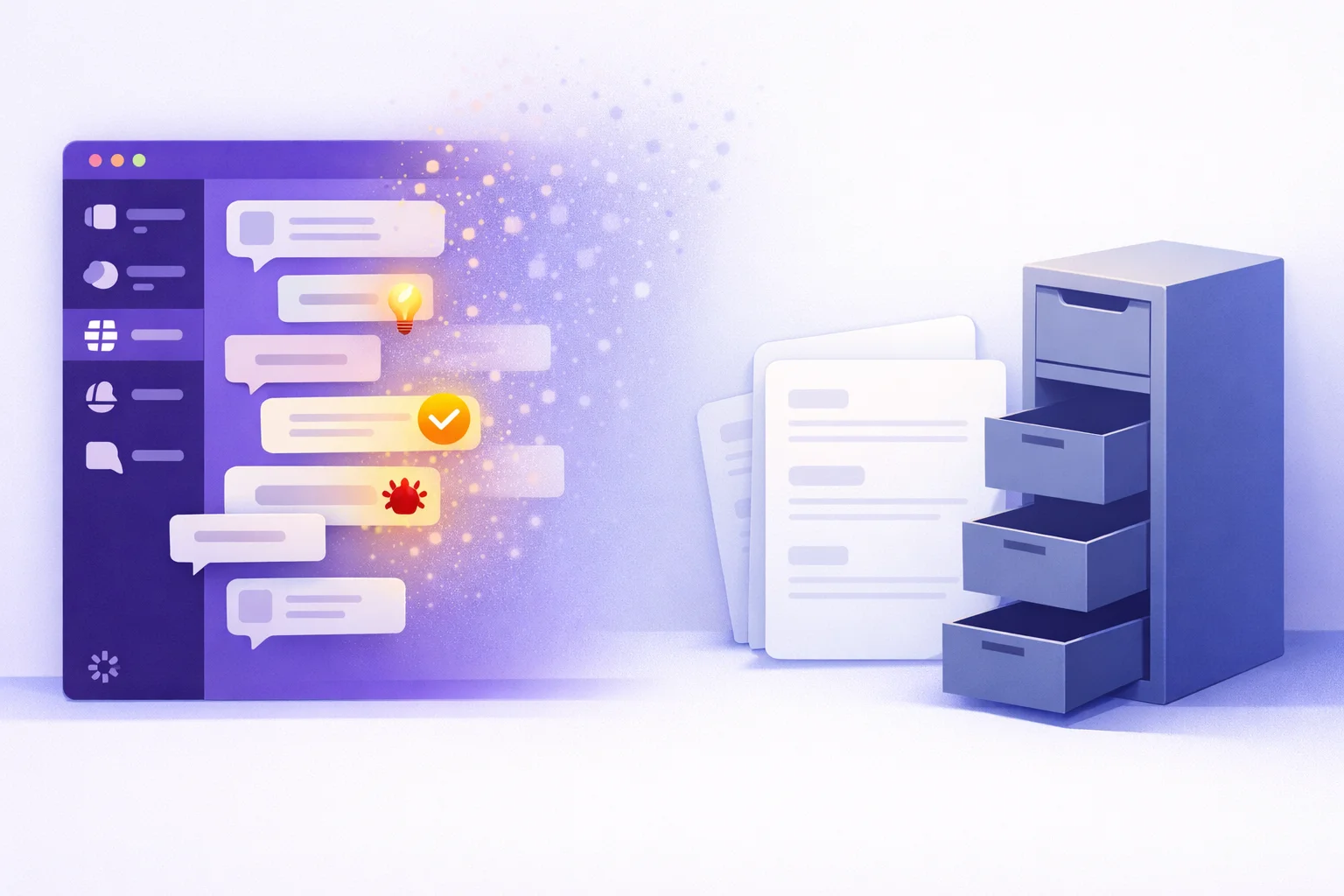
Every day, your team makes important decisions in Slack. Bug reports surface in #engineering. Product decisions happen in #product. Architecture discussions unfold in #backend. But within 24 hours, most of that knowledge is effectively lost — buried under new messages, invisible to anyone who wasn't online at the right time.
This isn't a people problem. It's a systems problem. Let's look at the 5 most common ways teams lose knowledge in Slack, and what you can do about it.
1. The scroll-past problem#
Slack channels move fast. In an active workspace, a channel can generate 200+ messages per day. Even if someone shares a critical decision, it takes less than a few hours before it's pushed off-screen by new conversations.
The result: Team members who weren't online miss important context. They either ask the same question again (wasting everyone's time) or make decisions without the full picture.
2. The thread graveyard#
Slack threads are where detailed technical discussions happen — but they're also where knowledge goes to die. Threads don't appear in the main channel by default, making them invisible to anyone who doesn't click into them. Even if you "also send to channel," the full context stays hidden in the thread.
The result: The most valuable discussions (bug analyses, architecture decisions, process changes) are the hardest to find later.
3. The "I know I saw it somewhere" problem#
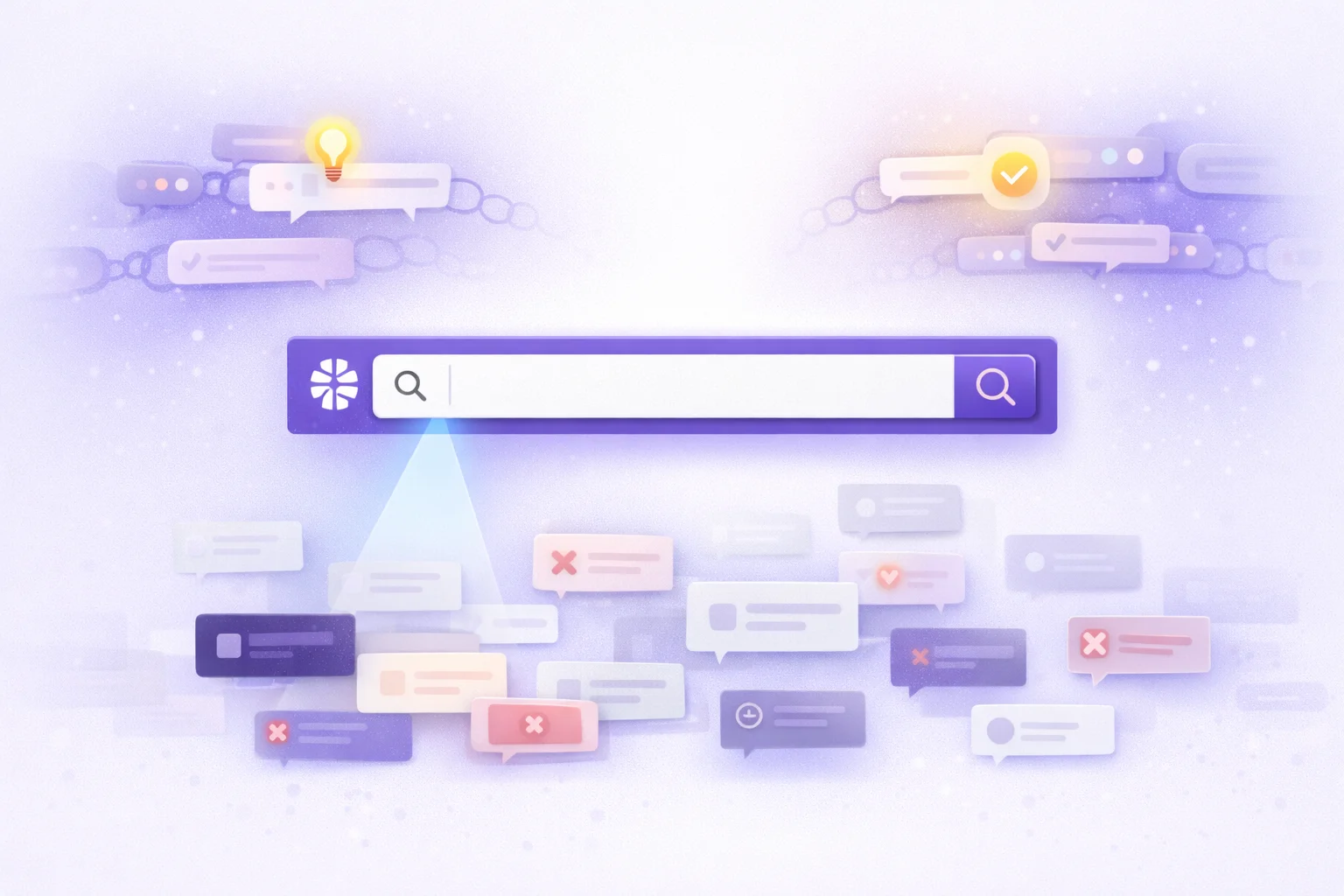
You remember reading about a decision last week. Was it in #product? #engineering? A DM? A thread? Slack's search helps, but only if you remember the right keywords. For decisions that were expressed conversationally ("yeah let's go with option B"), keyword search fails.
The result: Teams spend 30+ minutes per week searching for information they know exists somewhere in Slack.
4. The single point of knowledge#
In most teams, 2-3 people hold most of the institutional knowledge. They were in the right channels at the right time, they remember the context, and they become the go-to people for "how did we decide X?" When these people go on vacation — or leave the company — that knowledge goes with them.
The result: Knowledge concentration creates bottlenecks and organizational risk.
5. The manual documentation gap#
Some teams try to solve this by asking members to manually document decisions in Notion or Confluence. But manual documentation has a fundamental flaw: it requires someone to recognize that something is worth documenting, stop their work, switch context to the documentation tool, and write it up.
The result: Even teams with good documentation habits capture less than 20% of actionable information from chat.
The fix: automatic knowledge routing#
The common thread in all 5 problems is the same: relying on humans to manually capture, organize, and transfer knowledge from chat to documentation tools doesn't scale.
The solution is AI-powered knowledge routing that:
- Monitors selected channels for important discussions
- Classifies content into types (decisions, bugs, ideas, knowledge, process)
- Waits for maturity so incomplete discussions aren't routed prematurely
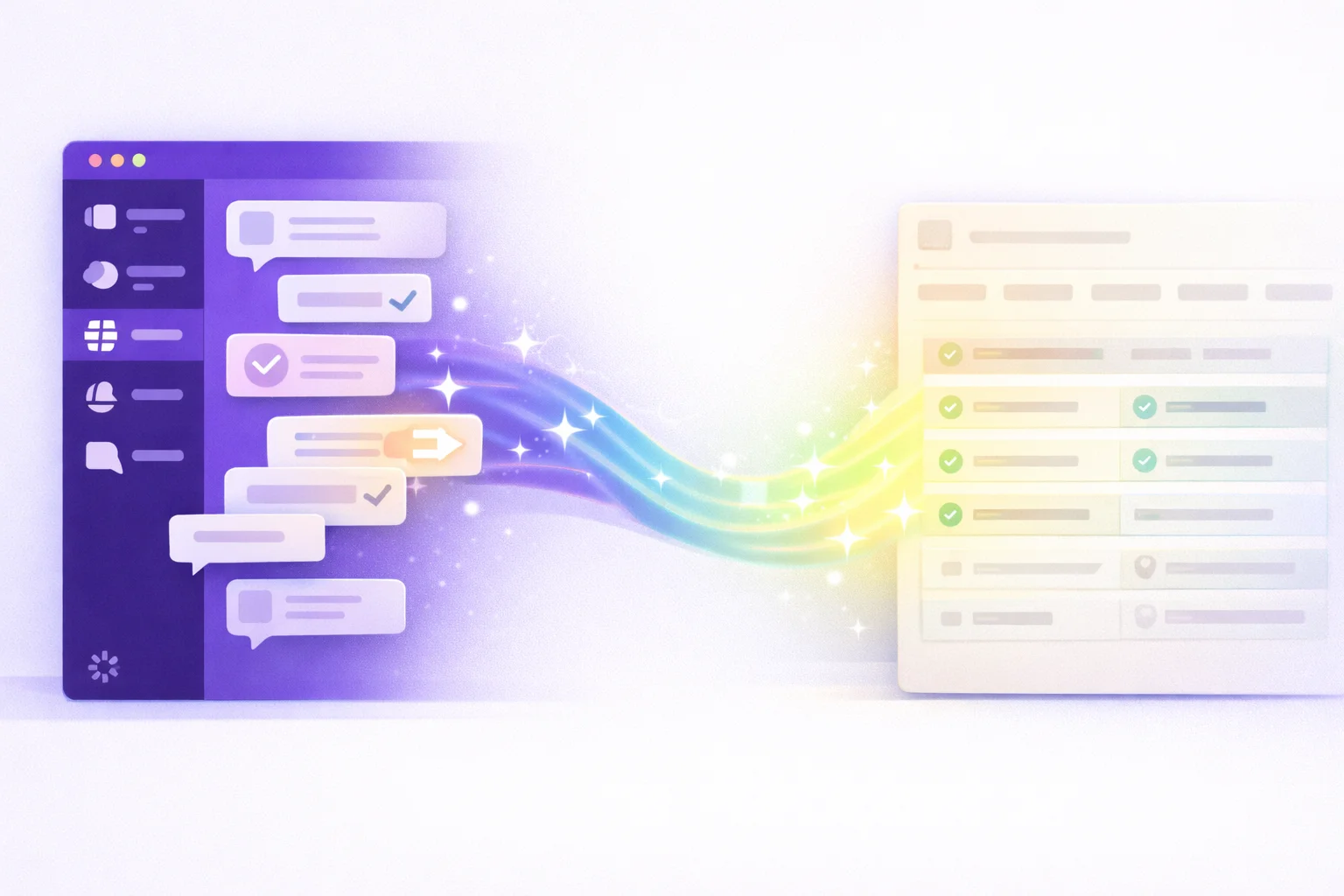
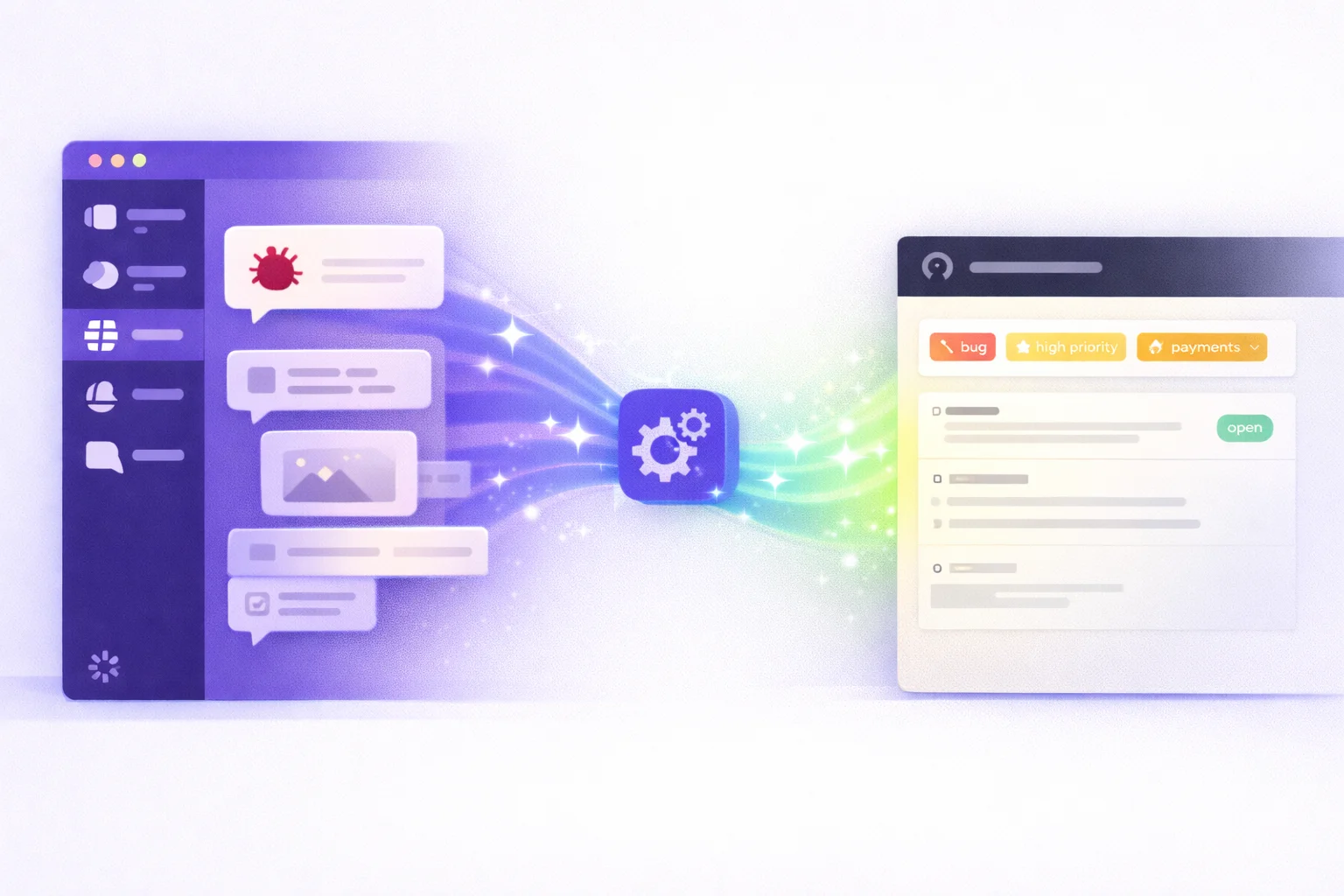
- Formats natively for each destination (Notion pages, Jira tickets, GitHub issues)
- Delivers automatically with full context, participants, and source links
This is exactly what ThreadMemory does. Our 7-stage AI pipeline processes conversations in real-time, so your team's knowledge is captured as it happens — not weeks later when someone finally gets around to documenting it.
Setup takes under 3 minutes: connect your Slack workspace, select channels to monitor, and create routing rules — like "decisions from #product go to Notion" or "bugs from #engineering go to Jira." Your team's knowledge starts flowing to the right tools, automatically.